 SURVIVE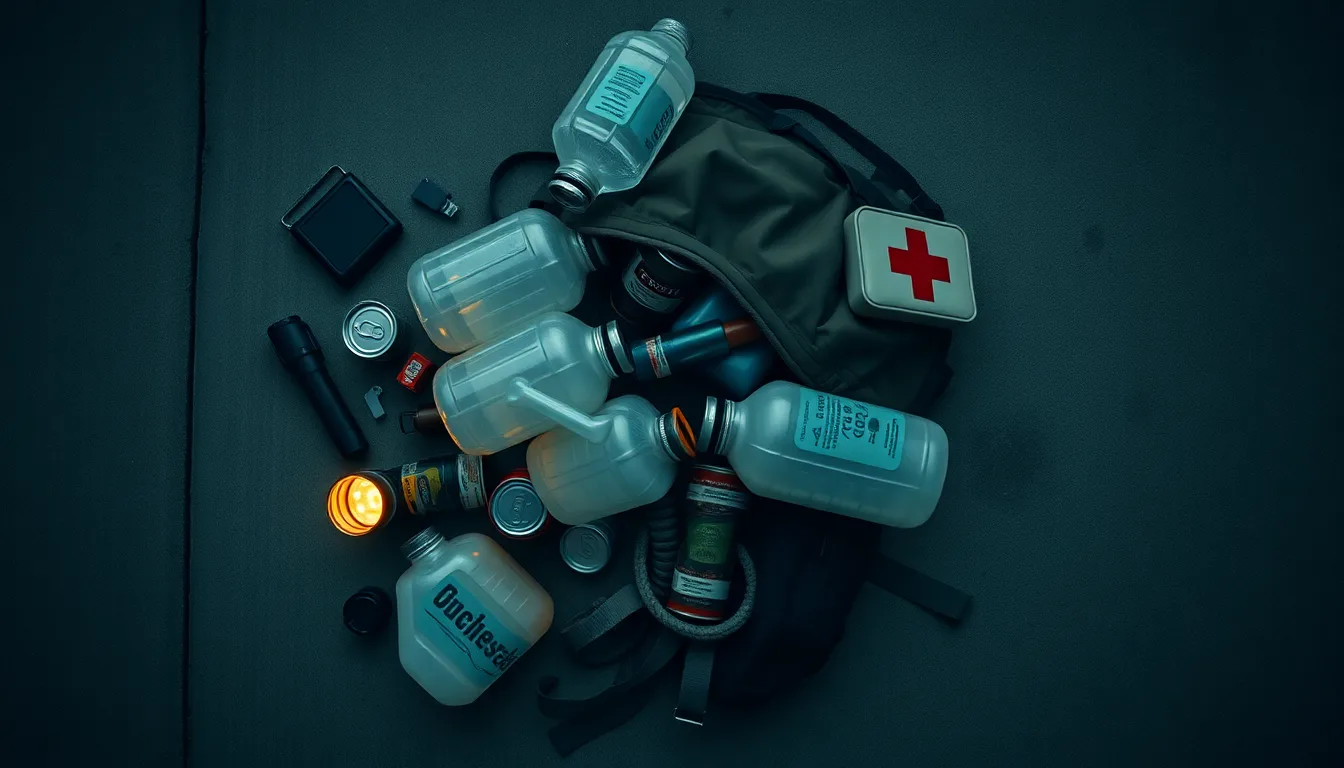
The Zombie Apocalypse Survival Kit: What You Actually Need
A categorized, itemized 72-hour kit — water first, defense last — anchored on real preparedness standards. Plus the one item no kit can hold for you.
Type "zombie apocalypse survival kit" into any search bar and you'll get a wall of tactical cosplay: crossbows, night-vision, a machete with a compass in the handle. Almost none of it keeps you alive. The kit that actually works looks boring — jugs of water, canned food, a first-aid box, a paper map — and it fits in one bag you can grab in ten seconds. This is that list, itemized by category and ranked by what keeps you breathing.
Strip away the fiction and a zombie outbreak is a mass-casualty event on a compressed clock, and emergency planners already know exactly what a household needs to survive one. So we're borrowing their standard — the 72-hour kit— and building it out zombie-style, piece by piece. Pack this and you've solved 90% of the problem. Then we'll get to the one item no kit on earth contains, and why it's the piece that actually decides your odds.
Build it around the 72-hour standard, not the fantasy
Every credible preparedness organization anchors on the same number: three days of self-sufficiency per person.That's the window before outside help arrives in a normal disaster — and in an outbreak, it's the volatile stretch when scavenging gets you killed. The U.S. Centers for Disease Control and Prevention built an entire zombie-preparedness campaign around this exact kit, precisely because the outbreak framing drags your brain away from weapons and toward supplies, shelter, and a written plan.
So don't start with the machete. Start with the seven categories below, in order. Build the kit once, store it where you can reach it in seconds, and you skip the single most dangerous part of the first three days entirely.
1. Water — the item everyone under-packs
Water is not the first category by accident. A human can survive weeks without food and only three to five days without water, which makes it the one supply you cannot improvise your way out of. The U.S. government's Ready.gov water guidance sets the standard: one gallon per person per day. Pack it first, pack it heavy.
- Stored water: 1 gallon per person per day, 3-day minimum. A household of four needs 12 gallons — non-negotiable, and heavier than people expect.
- A filter: a pump or straw-style filter turns a nearby stream into a renewable supply once your stored jugs run dry.
- Purification tablets or unscented bleach:a lightweight backup for water your filter can't fully clear.
- A collapsible container: so you can carry more the moment you find a source.
Store one gallon of water per person per day. You can go weeks without food — but only three to five days without water, and no gadget replaces it.
2. Food — calories, not comfort
The instinct to raid the snack aisle is optimizing for comfort, not survival. What you want is dense, shelf-stable calories that need no cooking, no refrigeration, and ideally no water to prepare. Three days' worth, per person.
- Non-perishable, ready-to-eat food: canned beans and meat, peanut butter, energy bars, dried fruit — a 3-day supply per person.
- A manual can opener:the single most-forgotten item in every kit. Canned food you can't open is dead weight.
- High-calorie, low-prep picks:favor foods that don't need heat or water, so you never trade your drinking supply for a hot meal.
3. Medical — the kit that keeps a scratch from killing you
Once hospitals are gone, an untreated cut is a genuine threat. Your medical category isn't about heroics — it's about controlling bleeding and preventing infection, the two things that quietly decide survival.
- A full first-aid / trauma kit: bandages, gauze, medical tape, antiseptic, and a way to apply pressure to a serious wound.
- Prescription medication: at least a 7-day supply of anything you take daily. This is the category no store can restock for you.
- Over-the-counter basics: pain relievers, anti-diarrheals, and any allergy medication your household relies on.
4. Tools — the quiet, unglamorous problem-solvers
This is the category the fantasy over-indexes on and the real kit keeps minimal. You want a few rugged, do-everything items — not a hardware store on your back.
- A multi-tool: pliers, blade, screwdriver, and can opener in one. If you carry one thing here, carry this.
- Duct tape and work gloves: for fast repairs, barricades, and handling debris without shredding your hands.
- Dust masks and a whistle: the mask filters contaminated air; the whistle signals your group without shouting and drawing a crowd.
5. Light and power — because the grid dies first
Assume the power is out and your phone is a countdown clock. Light and communication are what let you move at night and know what's happening beyond your walls.
- A flashlight or headlamp with spare batteries — a headlamp keeps both hands free for everything else.
- A power bank charged and ready, so your phone survives past the first day.
- A hand-crank or battery radio:when the internet is gone, broadcast is how you learn where it's safe to go.
6. Navigation — the map that works when GPS doesn't
When the grid is down, your phone's blue dot vanishes. This is where the whole genre of kit lists goes silent — and it's where survival actually lives.
- A paper map of your local area: mark your home, two exits, and a defensible safe point before you ever need it.
- A compass: so a paper map is actually usable when every familiar landmark is on fire or blocked.
- Pre-traced routes: a primary, a backup, and a worst-case path that avoid main roads and choke points — written down, not remembered.
7. Defense — last on the list, for a reason
Defense comes last not because it's useless, but because supplies keep you alive far longer than any weapon does — and the loudest option is usually the worst one. In a world where threats are drawn to sound, the quiet survive and the loud get found.
- A reliable melee tool: quiet, never jams, never runs out of ammunition. Survival experts consistently favor it for close encounters.
- Sturdy boots and durable clothing: unglamorous, but a twisted ankle or a soaked-through night can end you as surely as any bite.
- Nothing that draws a crowd: the goal is to avoid the fight, not win it. Loud is a liability.
The item no kit on earth contains
Pack all seven categories and you've done more than almost anyone reading this. But notice what's still missing — the one thing you cannot buy, store, or fit in a bag: knowledge of your own escape route.Every item above assumes you already know where you're going and whether you can get there on foot. Most people don't.
This matters more than any gear, because a zombie apocalypse is decided by geography. A statistical-physics model out of Cornell University ran real epidemic math on a fictional outbreak and found a dense city could be overrun in roughly seven days, while low-density regions held out far longer. Tim Frazier, who directs Georgetown University's emergency-management program, makes the same point in his own breakdown of zombie survival: the people who die first are the ones who move without a plan, or wait for a rescue that isn't coming. Your kit buys you time. Your route spends it well.
And here's the uncomfortable part: none of that is knowable from a checklist. Your population density, your distance to a defensible safe point, which floor you live on, how many people and pets you're responsible for — those numbers are different for every person reading this, and they swing your odds more than anything in the bag. A generic list can tell you what to own. It cannot tell you whether you can actually get out your own front door.
What the fun version is really teaching you
There's a reason the CDC wrapped real preparedness in a zombie story: people who glaze over at "build an emergency kit" will happily pack for the undead. And every item on this list is the same gear the American Red Cross recommends for hurricanes, wildfires, and floods. Water first, calories second, a first-aid kit, a radio, a plan. The horde is just a memorable wrapper around a bag that would genuinely carry you through the disasters that actually happen.
Which is the whole point. Building the kit is the easy, buyable half of survival. The other half — knowing whether your real neighborhood says hold or run, and having the route already traced — is the half no product ships with. If you want the full survival playbook behind this kit, our hour-by-hour guide to surviving a zombie apocalypse walks the first 72 hours decision by decision. But the fastest way to find the missing piece is to stop reading about it and watch it run on your own streets.
Sources
- CDC — Preparedness 101: Zombie Pandemic — builds a real emergency kit around an outbreak framing.
- Ready.gov — Water storage guidance — the one-gallon-per-person-per-day standard, water before food.
- Cornell University — statistical-physics outbreak modeling — finds a dense city could be overrun in roughly seven days.
- Georgetown University — Ask a Professor: How to Survive a Zombie Apocalypse — emergency-management professor Tim Frazier on plans over gear.
- American Red Cross — How to Prepare for Emergencies — the same kit, for the disasters that actually happen.
Keep reading
- How to Survive a Zombie Apocalypse — the hour-by-hour plan your kit is built for.
- Could You Survive the Apocalypse? — an audit of the instincts you think would save you.
- Run the Survive simulator — map your real escape route and score your odds.
- More field guides — the full Survive blog.