 SURVIVE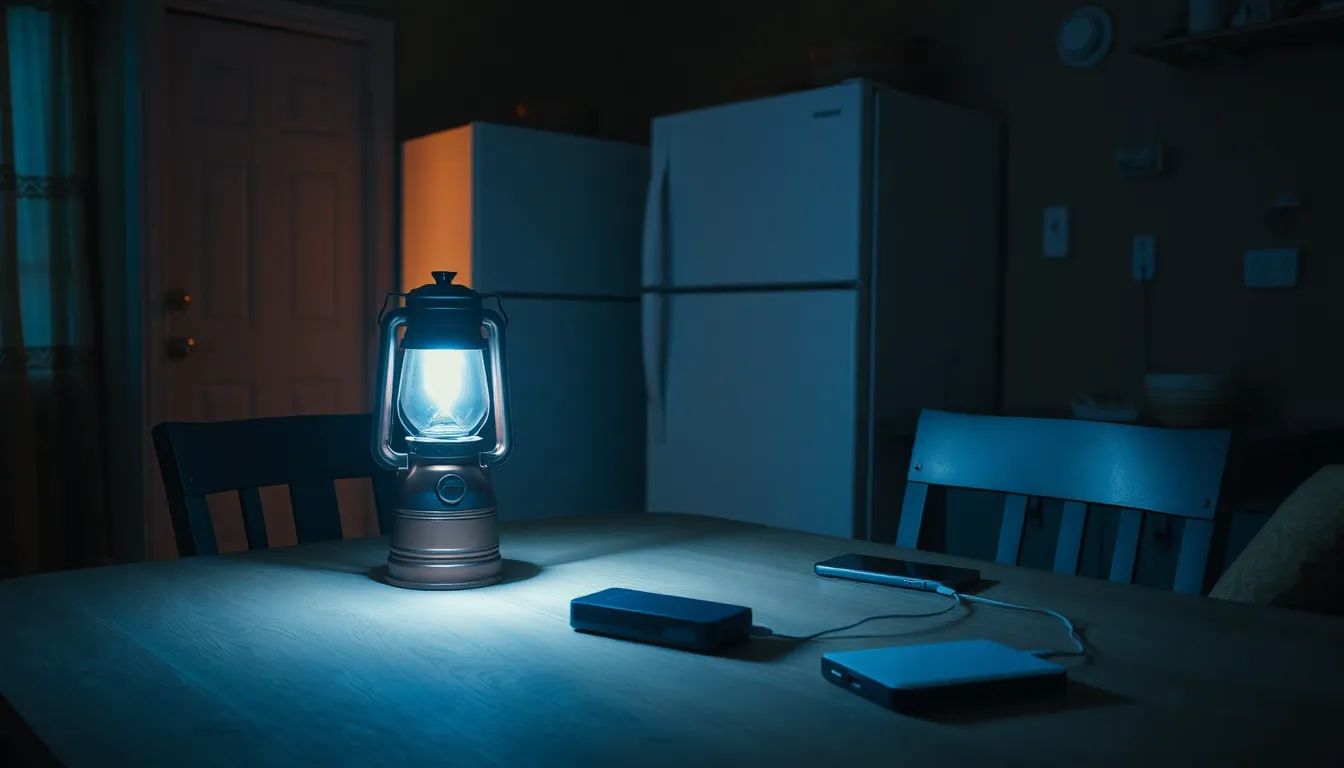
Power Outage Checklist: Stay Safe, Save Your Food, Avoid the CO Trap
A power outage checklist that matters: run generators outdoors, save your food, and know the one case where an outage means it's time to leave.
A power outage feels like an inconvenience until it isn't. Most pass in a few hours, but an extended one can spoil your food, knock out water and heat, and — most dangerously — tempt people into choices that get them killed. Unlike a fire or a flood, a power outage is usually a shelter-in-place event, so the checklist is less about getting out and more about riding it out safely.
This power outage checklist turns the U.S. government's Ready.gov power-outage guidance into a clear list of what actually matters — and covers the one scenario where an outage isn't the main event at all, but the warning sign of a bigger disaster where your escape route is what matters.
The power outage checklist
Four things carry almost all the risk in an outage. Get these right and the rest is comfort.
1. Run generators outdoors only — this one kills
This is the rule that saves lives. FEMA is emphatic: generators, camp stoves, and charcoal grills must be used outdoors only, at least 20 feet from windows, doors, and attached garages. Carbon monoxide is colorless and odorless, and every year people die running a generator in a garage or too close to the house. Install battery-backup carbon monoxide detectors on every level of your home, and never use a gas stove or oven to heat your home — same CO risk.
Generators and fuel should always be used outdoors, at least 20 feet from windows. Carbon monoxide is a colorless, odorless gas that can kill you, your family, and pets.
2. Keep the fridge and freezer closed
Food safety comes down to discipline about opening doors. FEMA's numbers: a refrigerator keeps food cold for about four hours, and a full freezer holds its temperature for about 48 hours — if you keep them shut. Use coolers with ice if the outage runs long, monitor with a thermometer, and follow the rule that removes all guesswork: throw out any food that's been at 40°F or higher for two hours or more. When in doubt, throw it out.
3. Plan ahead for medical needs
For anyone who relies on a power-dependent medical device or refrigerated medication, an outage is not an inconvenience — it's an emergency. FEMA advises talking to your provider in advance about a plan: backup power for devices, how long your medications can be stored at higher temperatures, and specific guidance for anything critical for life. If the power is out more than a day, discard refrigerated medication unless the label says otherwise, and contact your pharmacist for a new supply.
4. Keep alternate power and light ready
Take an inventory of what you rely on that needs electricity, then plan around it: a flashlight for every household member (candles are a fire risk), power banks and portable chargers, and a plan for whether your home phone even works without power. Disconnect appliances and electronics during the outage — when power returns, it can come back with a surge that damages them.
When the outage is a symptom, not the story
Here's the scenario the checklist above doesn't cover: sometimes the lights going out is the first sign of something bigger. Power outages ride along with the disasters you evacuate for — hurricanes, wildfires, floods, and severe storms. In those cases, sheltering in place with a cooler full of ice is the wrong plan entirely; the right question becomes the one every evacuation turns on: which way out, and can we reach safety?
That's where Survive comes in. If an outage is part of a larger emergency, enter your real address, pick the disaster, and it maps a dramatized escape route on your actual streets and scores how reachable safety is. It's entertainment, not a substitute for the checklist above — but it's the fastest way to see your way out for the outages that are really the start of something worse.
Sources
- Ready.gov (FEMA) — Power Outages — the outage checklist, generator safety, and the 4-hour / 48-hour food rules.
- U.S. Consumer Product Safety Commission — Carbon Monoxide — why generators must run outdoors and detectors matter.
- Ready.gov (FEMA) — Food Safety — the 40°F throw-it-out threshold and cold-holding times.
- American Red Cross — Power Outage Safety — corroborating guidance on generators, food, and medical needs.
Keep reading
- Flood preparedness — a common companion to outages, and when to leave instead.
- Disaster preparedness: the four pillars — where a power-outage plan fits in the bigger framework.
- How to make an evacuation plan — for when the outage is part of a bigger disaster.
- Run the Survive simulator — map your real escape route and score your odds.