 SURVIVE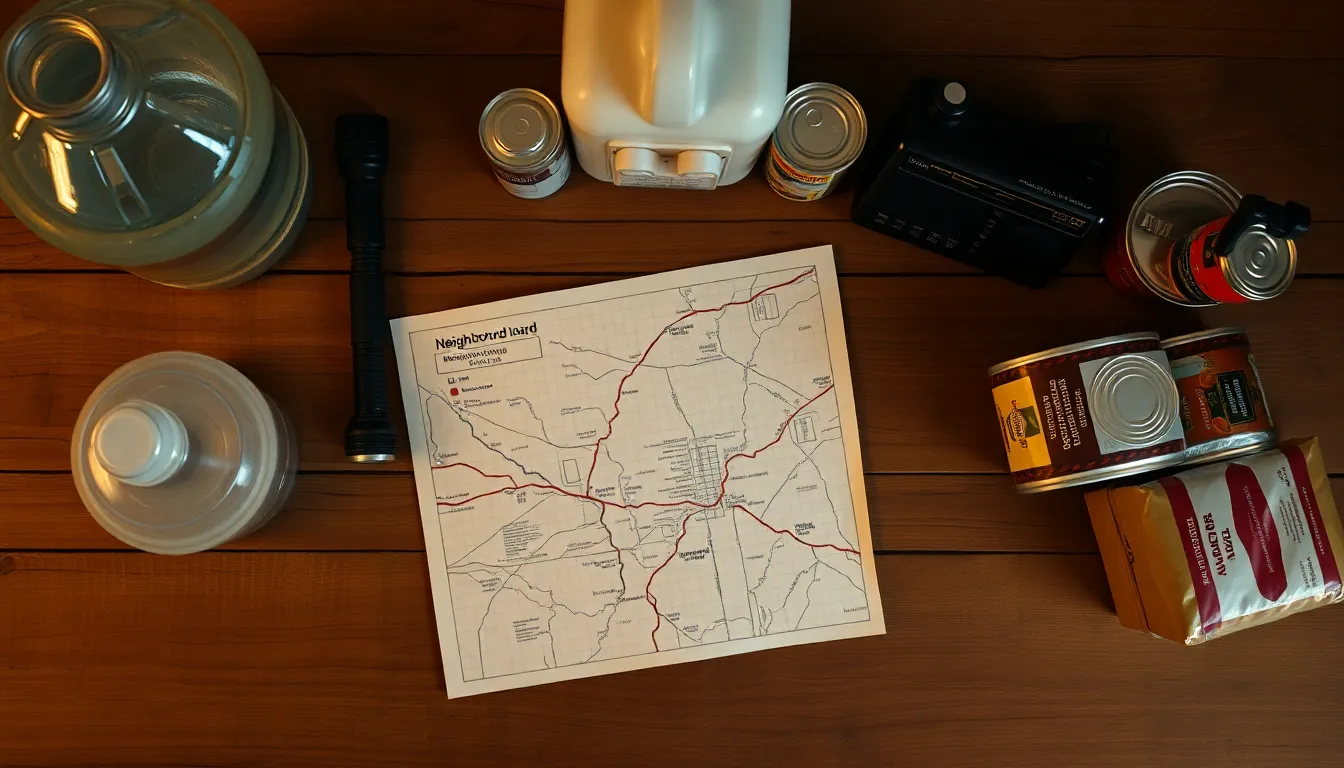
Disaster Preparedness: The Four Pillars (and Where to Start)
Disaster preparedness isn't a bunker. FEMA reduces it to four moves — know your risks, plan, kit, practice. The whole map, plus what no guide can fill in.
Disaster preparedness sounds like a project with no end — a garage full of gear, a bunker, a second job. It isn't. Strip away the marketing and every credible authority, from FEMA to the American Red Cross, reduces it to the same four moves: know your risks, make a plan, build a kit, and practice. Do those four things once and keep them current, and you are more prepared than the overwhelming majority of households.
This is the overview — the map of the whole territory. Each pillar links to a deeper guide, and the one thing none of them can hand you, your actual way out, is where a quick look at your own streets does what no checklist can.
The four pillars of disaster preparedness, in order
Preparedness has an order to it. You can't plan a route until you know your risks, and a plan you never practice fails under stress. Here is the whole framework on one screen.
Pillar 1: Know your risks
Preparedness is local. A coastal family plans for hurricanes and flooding; an inland one plans for tornadoes or wildfire; nearly everyone should plan for extreme heat and power outages, which FEMA now flags among the most common and deadly hazards. The agency's National Risk Index maps natural-hazard risk down to your county, and its Be Informed guidance covers what each disaster demands. You can't prepare for a threat you haven't named, so this pillar comes first.
No two communities face the same extreme conditions. Preparedness that ignores your location is preparing for someone else's disaster.
Pillar 2: Make a plan
A plan turns knowledge into decisions made in advance. FEMA's framework answers five questions: how you'll get alerts, your shelter plan, your evacuation route, your household communication plan, and your kit. The two hardest parts each deserve their own guide — how to build a family emergency plan that covers all five questions, and how to make an evacuation plan with a primary route, a backup, and a destination. Both hinge on a variable no template can supply: the real route out of your real home.
Pillar 3: Build a kit
A plan assumes you can be self-sufficient for a stretch while services are down. The baseline is a 72-hour kit: at minimum one gallon of water per person per day, calorie-dense non-perishable food, a first-aid kit, a flashlight and batteries, a hand-crank or battery-powered radio, medications, and copies of critical documents. Store it where you can grab it in seconds, and — because water and batteries expire and children outgrow the plan — review it at least once a year.
Pillar 4: Practice it
The pillar almost everyone skips. A plan that lives only on paper collapses when adrenaline takes over, because under stress people fall back on what they've rehearsed, not what they've read. The American Red Cross urges households to walk the evacuation route, run a two-minute drill to the meeting place, and make sure every family member — including kids — knows the plan. Practicing also surfaces the flaws you can't see on paper: the route that dead-ends, the meeting spot no one can reach, the door that's always locked.
Low-cost and no-cost preparedness
Preparedness is not a spending contest, and treating it as one is why people never start. FEMA publishes explicit low- and no-cost preparedness guidance because the highest-value steps are mostly free: writing down your plan, agreeing on two meeting places, picking an out-of-town contact, signing up for local alerts, filling a few water containers, and saving copies of key documents to the cloud. Build the kit gradually, a few items per grocery trip. The plan costs nothing and matters most.
Map your escape route: the variable no guide can fill in
Every pillar above eventually points at the same personal question, and it's the one a guide physically cannot answer: from your front door, which way is out, and can your household actually reach safety?That answer lives in your street grid — your exits, the roads that don't dead-end, the distance to open ground or a shelter you could reach on foot or by car. No article knows your address.
That's the gap Survive closes. Enter your real address, pick a disaster like a flood, fire, or earthquake, and it maps a dramatized escape route on your actual streets and scores how reachable safety is from where you live. It's entertainment, not a substitute for the real preparedness above — but it turns the abstract idea of "being ready" into something you can see for your own home in about ten seconds.
Sources
- Ready.gov (FEMA) — Be Informed — the hazard-by-hazard basis for knowing your local risks.
- FEMA — National Risk Index — interactive map of natural-hazard risk by county.
- Ready.gov (FEMA) — Build a Kit — the 72-hour kit baseline, water first.
- FEMA — Low- and No-Cost Preparedness — the free, highest-value steps anyone can take today.
- American Red Cross — How to Prepare for Emergencies — why practicing a plan is what makes it hold up.
The full field guide series
- How to build a family emergency plan — pillar 2, in full: FEMA's five-question framework.
- How to make an evacuation plan — primary route, backup, and destination.
- Home fire escape plan — two ways out and the two-minute rule.
- Earthquake preparedness — Drop, Cover, Hold On, and what comes after.
- Wildfire evacuation — defensible space and leaving before the smoke.
- Flood preparedness — Turn Around, Don't Drown, and your way up.
- Power outage checklist — stay safe, save your food, avoid the CO trap.
- Run the Survive simulator — map your real escape route and score how ready you are.